
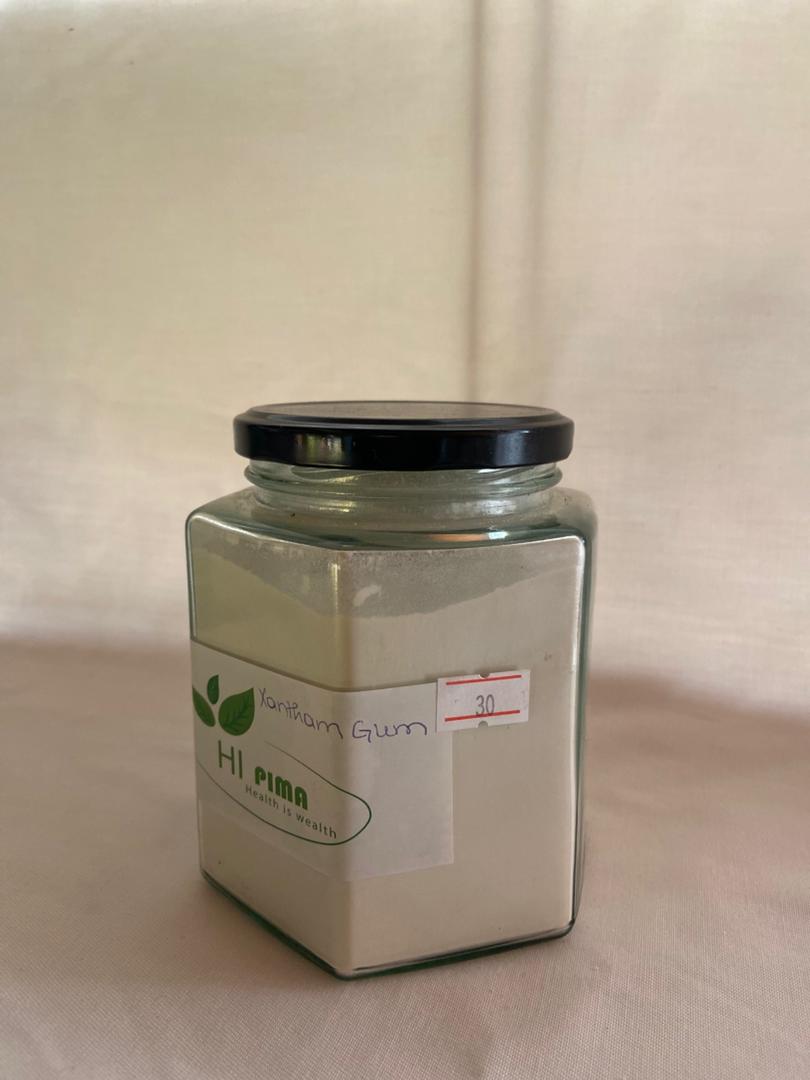
3,000 Fr
Xanthan gum is a natural, plant-based thickener and stabilizer made from fermented sugars. Commonly used in gluten-free baking, sauces, and beverages, it improves texture, prevents separation, and adds smooth consistency to recipes.
Description
1. General Overview
Xanthan gum is a polysaccharide used as a natural thickener, stabilizer, and emulsifier in food, cosmetics, and industrial products. Produced through the fermentation of sugar by the Xanthomonas campestris bacterium, xanthan gum is valued for its ability to improve texture, extend shelf life, and maintain consistency in both hot and cold preparations. It’s especially important in gluten-free baking, where it replaces the binding function of gluten.
2. Origin & Production Process
-
Source Organism: Xanthomonas campestris, a soil bacterium
-
Production:
-
Sugar (often glucose, sucrose, or lactose) is fermented by the bacteria.
-
A viscous gel is produced, which is then precipitated using alcohol (often isopropyl).
-
The substance is dried and ground into a fine, white to off-white powder.
-
-
Vegan & Allergen-Free: Derived from plant-based sugars, xanthan gum is gluten-free, soy-free, and dairy-free.
3. Physical Characteristics
-
Appearance: Fine, white or cream-colored powder
-
Solubility: Completely soluble in both hot and cold water
-
Taste: Tasteless and odorless
-
Texture Contribution: Adds viscosity and improves mouthfeel
4. Culinary Uses
Xanthan gum is used in small amounts to stabilize, emulsify, and thicken mixtures:
Common Applications:
-
Gluten-Free Baking: Mimics gluten’s elasticity in breads, muffins, and cakes
-
Sauces & Dressings: Prevents separation and improves pourability
-
Beverages: Keeps particles suspended in juices, smoothies, and protein shakes
-
Ice Cream & Yogurt: Enhances creaminess and reduces ice crystal formation
-
Foams & Culinary Gels: Used in molecular gastronomy for modern textures
Usage Tip: A small amount goes a long way — usually 0.1–0.5% of the total weight
5. Nutritional & Chemical Profile (per 1 tsp / ~3g)
-
Calories: ~10 kcal
-
Carbohydrates: ~2.5g (non-digestible fiber)
-
Fat/Protein: 0g
-
Glycemic Index: 0 – does not raise blood sugar
-
Fiber: Soluble fiber that supports gut movement
6. Health Benefits & Functional Properties
While not a direct nutrient source, xanthan gum offers a few health-related advantages:
-
Digestive Support: Acts as a soluble fiber, may help with regularity
-
Blood Sugar Regulation: May slow sugar absorption and stabilize glucose levels
-
Satiety: Increases viscosity in the gut, potentially promoting fullness
-
Laxative Effect (in large amounts): Can support bowel movements
7. Industrial and Non-Food Uses
-
Cosmetics & Toiletries: Thickens lotions, toothpaste, shampoos, and gels
-
Pharmaceuticals: Used in controlled-release medications and topical formulations
-
Oil Industry: Helps in thickening drilling fluids
8. Usage Guidelines
-
Measurement: Use precise quantities; overdosing can lead to slimy or gummy textures
-
Blending Tip: Mix with dry ingredients first or whisk into liquids slowly to prevent clumping
-
Storage: Store in an airtight container in a cool, dry place
9. Safety & Precautions
-
Generally Recognized as Safe (GRAS): Approved by FDA and EFSA
-
Digestive Sensitivity: Large doses may cause gas or bloating in sensitive individuals
-
Infants & Young Children: Should be used cautiously in formulas and foods
Additional information
| 100gr | Xantham gum |
|---|


