
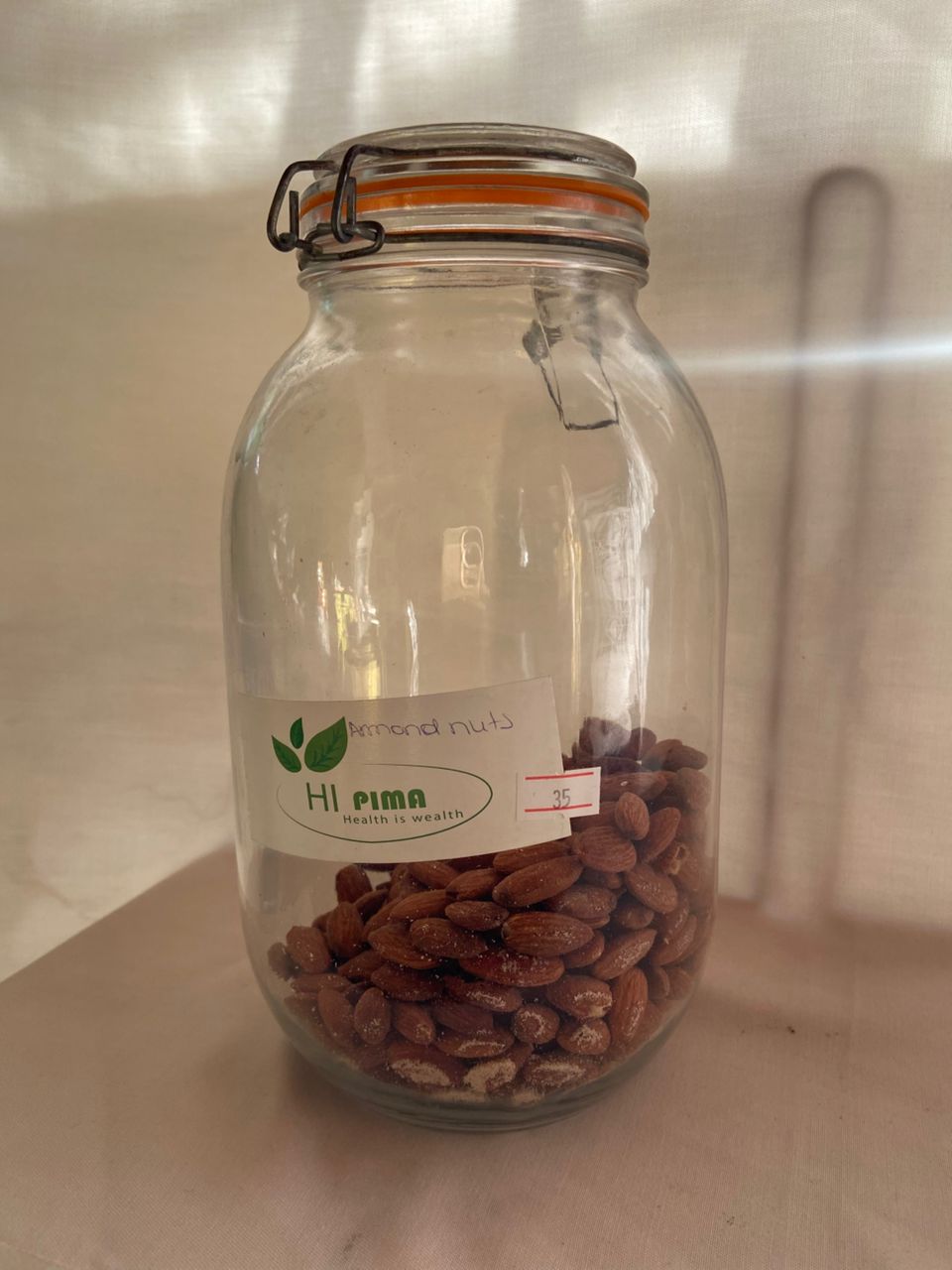
3,500 Fr
Almonds are nutrient-rich seeds of the Prunus dulcis tree, known for their mild, nutty flavor and crunchy texture. Packed with healthy fats, protein, fiber, vitamin E, and minerals, they support heart health, brain function, and overall wellness. Versatile in sweet and savory dishes, almonds are enjoyed raw, roasted, or as almond milk, flour, or butter.
Description
1. General Overview
Almonds are edible seeds from the fruit of the almond tree (Prunus dulcis), a member of the Rosaceae family. Often referred to as nuts, almonds are technically seeds of a drupe fruit. They are one of the most widely consumed tree nuts globally, valued for their rich flavor, high nutritional content, and versatility in both sweet and savory dishes.
2. Botanical and Geographic Origin
-
Botanical Name: Prunus dulcis
-
Family: Rosaceae
-
Origin: Native to the Middle East and South Asia; now grown extensively in California (USA), Mediterranean regions, and parts of Australia.
3. Types
-
Sweet Almonds: Edible and commonly used in cooking and snacking.
-
Bitter Almonds: Contain amygdalin, which can be toxic if not properly processed (used for almond oil and flavor extracts in controlled amounts).
4. Physical Characteristics
-
Shape: Oval, slightly flattened
-
Shell: Hard outer shell (removed for consumption)
-
Kernel: Brown skin covering a cream-colored seed
-
Texture: Firm, crunchy when raw; smooth and creamy when ground or blended
-
Flavor: Mildly sweet, nutty
5. Forms and Culinary Uses
Almonds are highly versatile and come in many forms:
-
Whole (raw or roasted)
-
Blanched (skin removed)
-
Sliced, slivered, or chopped
-
Almond flour or almond meal
-
Almond butter
-
Almond milk
Culinary Applications:
-
Baked goods (cakes, pastries, cookies)
-
Dairy alternatives (milk, yogurt)
-
Nut butters and sauces
-
Salads, rice, couscous, granola
-
Confectionery (marzipan, nougat, chocolates)
6. Nutritional Profile (per 28g or 1 oz)
-
Calories: ~160 kcal
-
Protein: ~6g
-
Fat: ~14g (mostly monounsaturated)
-
Carbohydrates: ~6g (incl. ~3.5g fiber)
-
Vitamin E: ~7.3 mg (50% DV)
-
Magnesium, Manganese, Calcium, Phosphorus
-
Rich in: Antioxidants (especially in the skin), plant-based protein, healthy fats
7. Health Benefits
Almonds are a powerhouse of nutrients and offer numerous health benefits:
-
Heart Health: Rich in monounsaturated fats and antioxidants, support cholesterol balance
-
Brain Function: Contain riboflavin and L-carnitine, associated with cognitive function
-
Blood Sugar Control: Low in carbs, high in healthy fats, fiber, and protein
-
Weight Management: Promote satiety and reduce hunger cravings
-
Bone Health: Good source of calcium, magnesium, and phosphorus
8. Storage
-
Best Storage: In a cool, dry place in an airtight container; refrigerate for longer shelf life
-
Shelf Life: Up to 6 months at room temperature; up to a year in the refrigerator
9. Precautions
-
Allergy Warning: Almonds are a common allergen and may cause reactions in sensitive individuals
-
Caloric Density: High in calories, so portion control is key for those monitoring weight
10. Cultural and Symbolic Use
-
Symbol of Health and Prosperity in many cultures
-
Used in traditional medicine (Ayurveda, Traditional Chinese Medicine)
-
Common in religious and festive dishes (e.g., Middle Eastern sweets, Indian halwa)
Additional information
| 100gr | Almondnut |
|---|